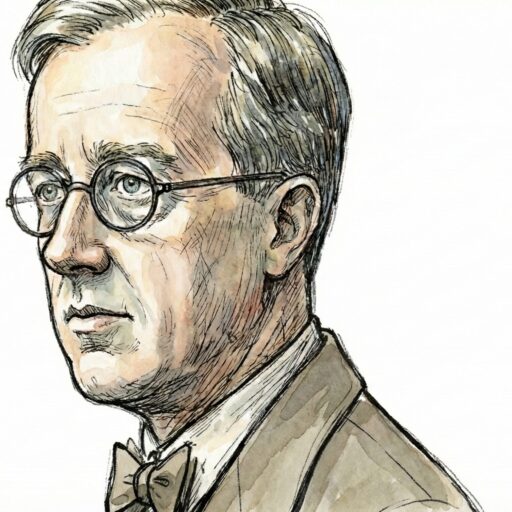
Major Compositions by Gustav Holst

The “Serious” Catalog: Understanding Holst’s Opus Numbers

Gustav Holst’s approach to assigning opus numbers was, by his own admission, inconsistent. Complicated by publication delays and the composer’s own ruthless self-criticism, the sequence of numbers does not always align with the chronology of composition. However, these numbers remain the primary map for navigating his mature output.

Holst began formally assigning opus numbers with his student opera The Revoke (1895), labeling it Op. 1 in a notebook intended to track his professional output. This created a deliberate boundary between his “mature” attempts and the earlier student manuscripts he dismissed as “Early Horrors” or “pot-boilers.”

The Logic of Grouping

Because Holst often had to wait years for his best work to be published, the opus numbers frequently group disparate works together by period rather than by release date. He often utilized “Numbers” to distinguish separate pieces within a single opus. A prime example is Opus 29, which contains three vastly different works composed between 1909 and 1913: the Oriental suite Beni Mora, the withdrawn suite Phantastes, and the famous St Paul’s Suite.

This grouping can occasionally create chronological confusion. For instance, the First Suite in E flat (1909) is cataloged as Op. 28 No. 1, immediately followed by the Second Suite in F (1911) as Op. 28 No. 2, despite other opus numbers being composed in the intervening years.

The Missing Numbers: Withdrawn Works

Holst was highly critical of his own music and famously believed that failure was a necessary part of an artist’s training. Consequently, several opus numbers correspond to works that he withdrew after hearing them performed.

  • Op. 11 (The Youth’s Choice): Withdrawn after a rehearsal where critical remarks convinced Holst the libretto was “impossible.”
  • Op. 29 No. 2 (Phantastes): After its premiere in 1912, Holst felt the musical humor “did not quite come off” and deleted the title from his list of compositions.
  • Op. 36 (Phantasy on British Folksongs): A string quartet he later referred to as a “guilty secret” and withdrew after a 1917 performance confirmed his doubts. (This has since been recorded and released)

The list below represents the sequence of works Holst acknowledged as his professional canon, ranging from the early promise of The Revoke, Op. 1 to the choral mastery of Six Choruses for male voices, Op. 53.

A List of Compositions by Opus Number

Op. 1

The Revoke

1895 | H. 7
Op. 2

Three Pieces

1910 | H. 68
Op. 3

Quintet

1896
Op. 5

Clear and Cool

1897 | H. 30
Op. 6

Örnulf’s Drapa

1898 | H. 34
Op. 7

Walt Whitman

1899 | H. 42
Op. 8

Symphony in F, The Cotswolds

1899-1900 | H. 47
Op. 9a

Five Part-Songs

1897-1900 | H. 48
Op. 9b

Ave Maria

1900 | H. 49
Op. 10

Suite de Ballet in E Flat

1899 | H. 43
Op. 11

The Youth’s Choice

1902 | H. 52
Op. 12

Five Part-Songs

1902-03 | H. 48
Op. 13

Indra

1903 | H. 66
Op. 14

Quintet

1903 | H. 67
Op. 15

Six Songs

1902-03 | H. 68
Op. 16

Six Songs

1903-04 | H. 69
Op. 17

King Estmere

1903 | H. 70
Op. 18

The Mystic Trumpeter

1904 | H. 71
Op. 19 No. 1

A Song of the Night

1905 | H. 74
Op. 19 No. 2

Invocation

1911 | H. 75
Op. 20a

Songs from ‘The Princess’

1905 | H. 80
Op. 20b

Four Old English Carols

1907 | H. 82
Op. 21 No. 1

Songs of the West

1906 | H. 86
Op. 21 No. 2

A Somerset Rhapsody

1907 | H. 87
Op. 22

Two Songs without Words

1906 | H. 88
Op. 23

Sita

1899-1906 | H. 89
Op. 24

Hymns from the Rig Veda

1907-08 | H. 90
Op. 25

Savitri

1908 | H. 96
Op. 26 No. 1

Choral Hymns from the Rig Veda. First Group

1908-10 | H. 97
Op. 26 No. 2

Choral Hymns from the Rig Veda. Fourth Group

1909 | H. 98
Op. 26 No. 3

Choral Hymns from the Rig Veda. Second Group

1910 | H. 99
Op. 26 No. 4

Choral Hymns from the Rig Veda. Third Group

1912 | H. 100
Op. 27a

The Vision of Dame Christian

1909 | H. 101
Op. 27b

Stepney Pageant

1909 | H. 102
Op. 28 No. 1

Suite No.1 in E-Flat

1909 | H. 105
Chaconne, Intermezzo, March
Op. 28 No. 2

Suite No.2 in F

1911 | H. 106
March, Song Without Words, Song of the Blacksmith, Fantasia on the Dargason
Op. 29 No. 1

Beni Mora

1909-10 | H. 107
Op. 29 No. 2

St Paul’s Suite

1913 | H. 118
Op. 29 No. 2

Phantastes

1911 | H. 112
Op. 30

The Cloud Messenger

1909-10 | H. 111
Op. 31 No. 1

Hecuba’s Lament

1911 | H. 115
Op. 31 No. 2

Hymn to Dionysus

1913 | H. 116
Op. 32

The Planets

1914-16 | H. 125
Mars, the Bringer of War, Venus, the Bringer of Peace, Mercury, the Winged Messenger, Jupiter, the Bringer of Jollity, Saturn, the Bringer of Old Age, Uranus, the Magician, Neptune, the Mystic
Op. 33

Japanese Suite

1915 | H. 126
Prelude: Song of the Fisherman, Ceremonial Dance, Dance of the Marionette, Interlude: Sing of the Fisherman, Dance under the Cherry Tree, Finale: Dance of the Wolves
Op. 34 No. 1

This have I done for my true love

1916 | H. 136
Op. 34 No. 2

Lullay my liking

1916 | H. 136
Op. 34 No. 3

Of one that is so fair

1916 | H. 136
Op. 34 No. 4

Bring us in good ale

1916 | H. 136
Op. 35

Four Songs for voice and violin

1916-17 | H. 132
Jesu Sweet, now will I sing, My soul has nought but fire and ice, I sing of a maiden, My Leman is so true
Op. 35

Four Songs

1916-17 | H. 132
Op. 36

Phantasy Quartet on British Folksongs

1916 | H. 135
Op. 36a

Three Festival Choruses

1916 | H. 131
Op. 36b

Six Choral Folk Songs

1916 | H. 136
Op. 37

The Hymn of Jesus

1917 | H. 140
Prelude, Hymn
Op. 38

Ode to Death

1919 | H. 144
Op. 39

The Perfect Fool

1918-22 | H. 150
Op. 40 No. 1

A Fugal Overture

1922 | H. 151
Op. 40 No. 2

A Fugal Concerto

1923 | H. 152
Op. 41

First Choral Symphony

1923-24 | H. 155
Op. 42

At the Boar’s Head

1924 | H. 156
Op. 43 No. 1

The Evening Watch

1924-25 | H. 159
Op. 43 No. 2

Sing me the men

1924-25 | H. 161
Op. 44

Seven Part-Songs

1925-26 | H. 162
Op. 45 No. 1

The Golden Goose

1926 | H. 163
Op. 45 No. 2

The Morning of the Year

1926-27 | H. 164
Op. 46 No. 1

Chrissemas Day in the morning

1926 | H. 165
Op. 46 No. 2

Two Folk Song Fragments

1927 | H. 166
Op. 47

Egdon Heath

1927 | H. 172
Op. 48

Twelve Songs

1929 | H. 174
Persephone, Things Lovelier, Now in these Fairylands, A Little Music, The Thought, The Floral Bandit, Envoi, The Dream-City, Journey’s End, In the Street of Lost Time, Rhyme, Betelgeuse
Op. 49

Double Concerto

1929 | H. 175
Op. 50

The Wandering Scholar

1929-30 | H. 176
Op. 51

A Choral Fantasia

1930 | H. 177
Op. 52

Hammersmith

1930 | H. 178
Op. 53

Six Choruses

1931-32 | H. 186